
The Role of Data Analytics in Modern Construction Project Management
Table of Contents
1. Introduction
2. Why Construction Projects Need Data-Driven Decisions
3. How Data Analytics Transforms Modern Construction Project Management
4. Key Areas Where Analytics Makes the Biggest Impact
5. Real-World Example: How Analytics Prevents Project Delays
6. The Future of Data-Driven Construction
7. Why Partnering With the Right Data Team Matters
8. Conclusion
1. Introduction
Construction project management has always been challenging — tight deadlines, unpredictable site conditions, fluctuating material prices, labor shortages, and constant coordination between teams. Traditionally, much of this work depended on manual tracking, Excel sheets, and experience-based decisions.
But that approach doesn’t work anymore. Modern construction projects run at a faster pace and require decisions backed by accurate, real-time data. This is where data analytics has become a game-changer.
Analytics is no longer “nice to have.” It is now a core part of how construction companies plan projects, control costs, and reduce risks.
2. Why Construction Projects Need Data-Driven Decisions
Construction moves quickly, and problems multiply when they are not caught early.
When project managers rely on outdated spreadsheets or weekly reports, they often see issues after the damage has already happened — materials over-ordered, labor hours overspent, or equipment sitting idle.
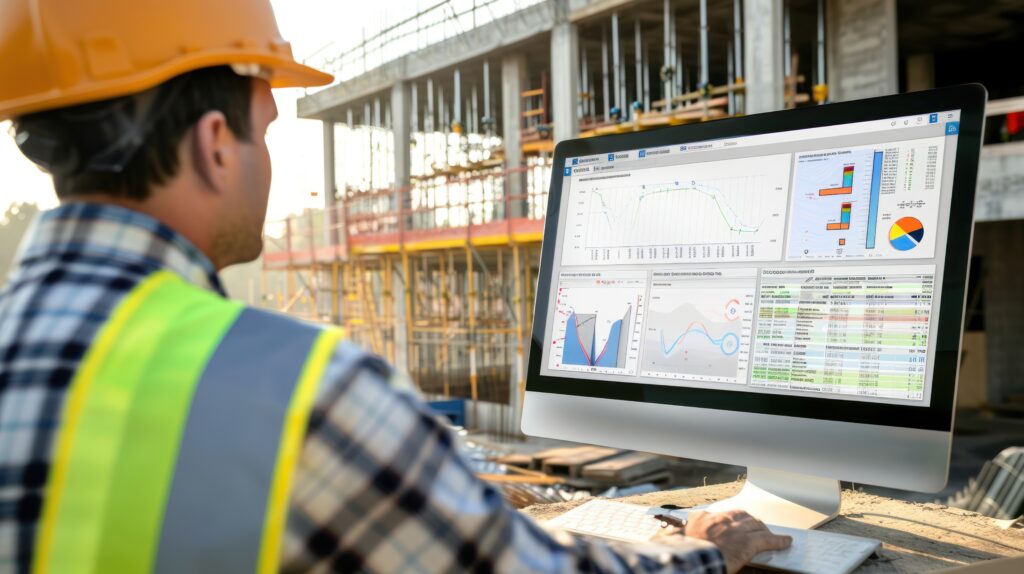
Data analytics fixes this by giving project teams real-time visibility into what’s happening on every job site. Instead of reacting late, managers can make proactive decisions that protect timelines and budgets.
3. How Data Analytics Transforms Modern Construction Project Management
Data analytics connects information from different systems — ERP platforms, project scheduling tools, timesheets, equipment systems, and field apps — and presents it in a clear, usable way.
Project managers no longer have to guess. They can see:
● Which projects are going over budget
● Where delays may happen
● How equipment is being used
● Which teams are falling behind
● What materials are running short
● How change orders impact the overall timeline
This level of clarity changes the way construction teams work. Instead of finding problems during review meetings, project managers can identify issues the same day they appear.
4. Key Areas Where Analytics Makes the Biggest Impact
Cost Control & Budget Accuracy
Construction budgets rarely stay steady. Material price changes, subcontractor delays, and unexpected labor costs can quickly derail profitability. Analytics helps teams track spending daily — not monthly — so costs never get out of control.
Scheduling & Work Progress Tracking
Instead of waiting for weekly updates, project managers can see real-time progress from the field. Analytics reveals which tasks are ahead, behind, or at risk, helping teams prevent delays early.
Labor Productivity
By comparing planned vs. actual labor hours, companies can identify unproductive teams, excessive overtime, or staffing mismatches. This leads to better labor planning and reduces unnecessary spending.
Equipment Utilization
One of the biggest hidden losses in construction is underused equipment. Analytics shows how often equipment is used, helps avoid rental overruns, and ensures machines are moved to the right site at the right time.
Risk Identification
With insights into delays, cost overruns, safety incidents, and change orders, analytics helps predict risks before they impact the project. This gives project managers the chance to correct course early.
5. Real-World Example: How Analytics Prevents Project Delays
A mid-sized construction company working on a commercial building project was consistently facing schedule delays. The project manager assumed the issue was labor shortage, but data analytics showed the real problem: material deliveries were frequently delayed, causing crews to wait on-site.
By integrating data from procurement logs, vendor performance records, and field updates, the company discovered that one supplier was responsible for over 60% of the delays.
With the insight:
● They switched to a more reliable vendor
● Adjusted their procurement schedule
● Prevented 22 days of further delay
Without analytics, they would’ve spent months guessing — and losing money.
6. The Future of Data-Driven Construction
Over the next few years, construction will rely even more on predictive analytics, advanced dashboards, and automated reporting. Companies that adopt data now will stay competitive, while those who rely solely on manual systems will fall behind.
The industry is moving toward:
● Real-time dashboards connected to ERP systems
● Predictive forecasting for schedules and costs
● Automated WIP reporting
● Better subcontractor performance tracking
● AI-assisted decision-making (without replacing human judgment)
Data-driven construction is no longer the future — it’s already here.
7. Why Partnering With the Right Data Team Matters
Most construction companies have the data. The real problem is accessing it, organizing it, and turning it into useful insights.
This is where a specialized analytics partner like SelectView Data Solutions makes the difference. With expertise in construction ERPs like Viewpoint Vista, Spectrum, SelectView helps companies build dashboards and reporting systems that actually solve problems — not just display numbers.
Instead of spending hours pulling reports manually, project managers get clean, real-time dashboards designed for decision-making.
8. Conclusion
Data analytics is now an essential part of modern construction project management. It helps teams control costs, improve scheduling, increase productivity, and reduce risk — all while enabling faster, smarter decisions. Companies that embrace data-driven processes gain a major advantage, especially in a competitive industry where profit margins are tight and delays are costly.
By adopting strong analytics tools and partnering with experts who understand construction, project teams can ensure every project stays on track, on budget, and aligned with long-term business goals.